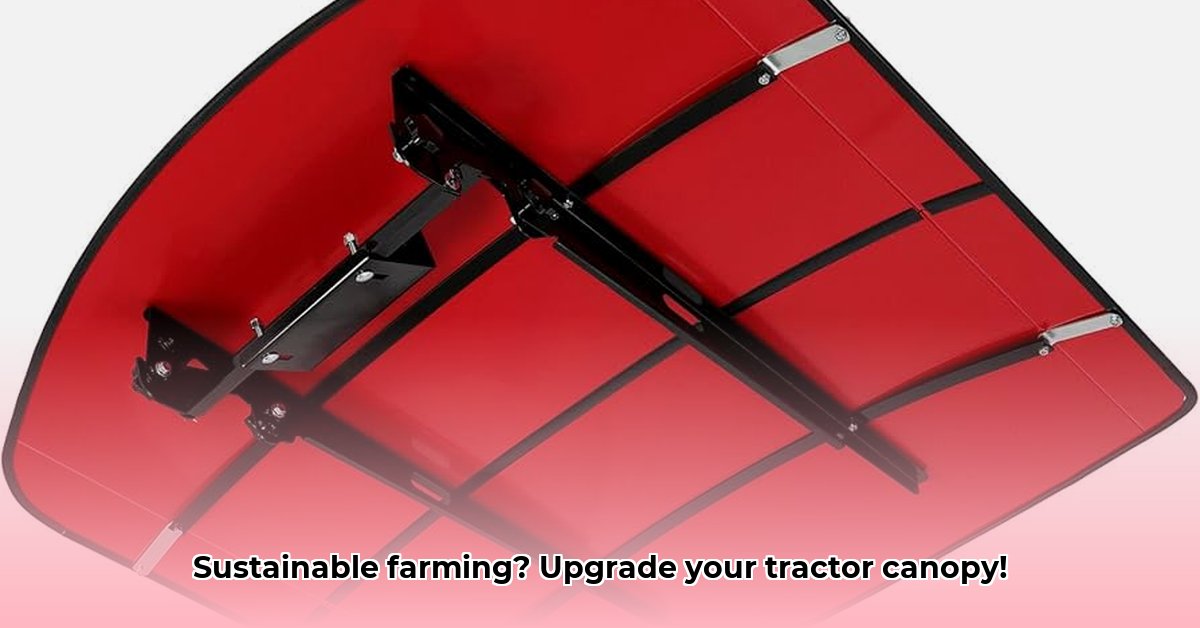
Choosing the right tractor canopy is crucial for operator safety, equipment protection, and sustainable farming practices. This guide compares high-density polyethylene (HDPE) and fiberglass canopies, offering a comprehensive analysis to help you make an informed decision. We'll delve into durability, cost, environmental impact, installation, and long-term value, providing a clear path to selecting the ideal canopy for your needs.
HDPE vs. Fiberglass: A Detailed Comparison
The choice between HDPE and fiberglass canopies hinges on several key factors. While fiberglass offers a lower initial cost, HDPE often proves more economical in the long run due to its superior durability and longevity.
| Feature | HDPE | Fiberglass |
|---|---|---|
| Durability | Superior impact resistance; less prone to damage (e.g., hail) | Moderate durability; more prone to cracking and shattering under stress |
| Longevity | Significantly longer lifespan (potentially decades) | Shorter lifespan (requiring more frequent replacements) |
| Cost | Higher initial purchase price | Lower initial purchase price |
| Environmental Impact | More recyclable; but energy-intensive production | Less recyclable; disposal can be challenging and environmentally taxing |
| Installation | Can be slightly more complex | Generally easier installation |
| Aesthetic Appeal | Fewer color options available | Wider range of color options available |
Durability and Longevity: HDPE's superior impact resistance translates to a significantly longer lifespan, potentially saving you money on replacements over the years. Fiberglass, while initially cheaper, is more susceptible to damage from impacts and UV degradation.
Environmental Considerations: Both materials present environmental trade-offs. HDPE production is energy-intensive, but its recyclability is improving. Fiberglass presents disposal challenges due to its composite nature. Choosing recycled HDPE or exploring bio-based alternatives can further minimize environmental impact.
Installation and Compatibility: A Step-by-Step Guide
Proper installation is vital for safety and canopy longevity. The process differs depending on whether your tractor has a Rollover Protective Structure (ROPS) – a safety cage designed to protect the operator in a rollover.
Installation on Tractors WITH ROPS:
- Consult the manual: Always begin by thoroughly reviewing the manufacturer's instructions for both the canopy and your tractor.
- Secure the brackets: Carefully attach the canopy brackets to your ROPS using the provided hardware. Ensure a snug and secure fit.
- Align the canopy: Position the canopy precisely over the brackets, ensuring proper alignment.
- Fasten securely: Tighten all fasteners according to the manufacturer's specifications.
- Inspect thoroughly: After installation, perform a visual inspection to ensure all connections are secure and stable.
Installation on Tractors WITHOUT ROPS:
Installing a canopy on a tractor without a ROPS requires a ROPS retrofit kit, specifically designed for your tractor model. This is a complex process that should only be performed by a qualified mechanic. Improper installation is extremely dangerous.
Compatibility: Always verify canopy compatibility with your specific tractor model. Improper fit can compromise safety and void warranties.
Cost-Benefit Analysis: Long-Term Value
While HDPE canopies have a higher initial cost, their longer lifespan and reduced maintenance needs often make them more economical in the long run. A comprehensive cost-benefit analysis should consider:
- Initial purchase price: The upfront cost of the canopy.
- Installation costs: Labor costs (if applicable).
- Maintenance costs: Regular cleaning and repair expenses.
- Replacement costs: The cost of replacing a damaged or worn-out canopy.
- Environmental costs: Consider the embodied energy and recyclability of each material.
By considering these factors, you can create a realistic cost projection for both HDPE and fiberglass over the expected lifespan of each canopy.
Material Selection and Sustainability: Minimizing Environmental Impact
Sustainable agriculture requires responsible choices. While HDPE generally has a lower environmental impact than fiberglass, due to increased recyclability, consider the following:
- Recycled materials: Opt for canopies made from recycled HDPE to further reduce environmental impact.
- Bio-based alternatives: Explore emerging bio-based materials for even greater sustainability.
- Responsible disposal: Follow proper disposal guidelines to minimize landfill waste.
Market Trends and Future Outlook
The tractor canopy market is experiencing a surge in demand for durable, sustainable, and lightweight options. This is driving innovation in materials and design, with a focus on improved recyclability and reduced environmental impact. Expect to see increased availability of recycled and bio-based materials in the coming years. Regulatory changes related to tractor safety and environmental protection will also influence material choices.
Conclusion: Choosing the Right Canopy for Your Needs
The optimal canopy material depends on your individual priorities. Consider your budget, tractor type, long-term cost considerations, and environmental concerns. A well-informed decision will ensure you select a canopy that provides years of reliable service while aligning with your sustainability goals. Remember, a durable and well-installed canopy is an investment in your safety, comfort, and the longevity of your equipment.